Source CE Certified Paraffin Gauze Dressing for Burns, Wounds, and Surgery
Compare 30 listings of CE Certified Paraffin Gauze Dressing from verified Chinese manufacturers. Buyers can evaluate sterilization methods, material composition, and packaging options for burn care, hospital use, and surgical applications.
Key considerations
Products List




Comprehensive Sourcing Guide
Strategic Sourcing Guide for CE Certified Paraffin Gauze Dressings
Procuring medical-grade paraffin gauze dressings requires a rigorous approach to ensure product safety, regulatory compliance, and supply chain reliability. For buyers searching for CE certified paraffin gauze, the primary objective is to identify suppliers who can consistently deliver sterile, non-adherent wound care materials that meet international safety standards. The market offers a variety of options, but the distinction between generic cotton gauze and specialized paraffin-impregnated dressings is critical for clinical efficacy. This guide outlines the essential technical, regulatory, and operational factors that define a successful procurement strategy for these specific medical supplies.
Technical Specifications and Material Composition
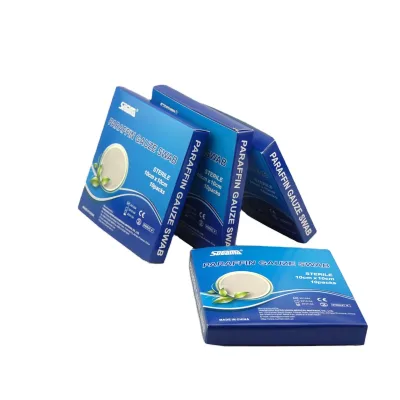
The fundamental characteristic of a paraffin gauze dressing is its composition, which directly influences its performance in wound management. Based on observed product attributes, the core materials typically include gauze and paraffin. The gauze substrate is often derived from 100% cotton, providing a soft, breathable, and absorbent base that is gentle on sensitive tissue. The paraffin component serves as the active agent, creating a non-adherent barrier that prevents the dressing from sticking to the wound bed, thereby minimizing trauma during removal.
When evaluating technical specifications, buyers must verify the dimensions and standard sizes available. Market observations indicate a range of standard dimensions, including 5x5cm, 10x10cm, 10x20cm, and 7.5cmx10cm. The availability of these specific sizes is vital for matching the dressing to the wound area. Furthermore, the product model numbers, such as JRFG038, JRFG030, HS-F45, and JLY-PGD series, serve as unique identifiers for specific product configurations. These models often correlate with specific packing methods and sterilization techniques.
The physical form of the product is another key specification. While some items are packaged individually in pouches, others may come in cartons or corrugated cartons. The color is consistently observed as white, which is standard for medical textiles to ensure visibility of any discoloration or contamination. Buyers should confirm that the material composition explicitly states "Gauze" and "Paraffin" rather than generic "Cotton" alone, as the paraffin impregnation is the defining feature of this category.
Compliance and Certification Verification
Regulatory compliance is the cornerstone of sourcing medical devices, particularly those bearing the CE mark. The CE certification indicates that the product meets the essential requirements of the European Union's Medical Device Regulation (MDR) or the previous Active Implantable Medical Devices Directive, depending on the device classification. In the context of paraffin gauze, the certification often appears alongside other critical standards such as ISO 13485, which specifies the quality management system requirements for medical devices.
When reviewing supplier documentation, buyers should look for a combination of certifications. Observed data suggests that compliant products often carry CE, RoHS, and ISO certifications. Additionally, specific certificates like CE ISO13485 are frequently cited, reinforcing the manufacturer's adherence to quality management protocols. It is also important to note that some products may list FDA or ISOCE certifications, indicating a broader regulatory footprint. However, the presence of the CE mark is the primary requirement for the specified search keyword.
Buyers must verify that the certification is current and applicable to the specific product model being purchased. Certifications are not blanket approvals; they are often tied to specific manufacturing sites and product lines. For instance, a supplier might have CE certification for their surgical supplies but not for their general medical materials. Therefore, the procurement team should request the specific certificate number and verify its validity against the official EU databases or the notified body's records. The "Medical Device Regulatory Type" should also be confirmed as "Surgical Supplies Materials" to ensure the product falls under the correct regulatory framework.
Sterilization Methods and Shelf Life
The sterility of the dressing is non-negotiable for any product intended for wound care. The supply chain data reveals that paraffin gauze dressings are available with various sterilization methods, including Ethylene Oxide (EtO) sterilization and Gamma irradiation. Ethylene Oxide sterilization is a common method for heat-sensitive materials like paraffin, as it effectively eliminates microorganisms without damaging the product's structural integrity. Gamma sterilization is another viable option, offering a different set of advantages regarding penetration and residue.
The choice of sterilization method can impact the product's shelf life and packaging requirements. Products with Ethylene Oxide sterilization often have a specified shelf life of 3 years, while others may extend to 5 years. This variance underscores the importance of checking the "Quality Guarantee Period" and "Shelf Life" attributes for each specific model. A longer shelf life can be advantageous for inventory management, reducing the risk of waste due to expiration.
Buyers should also consider the packaging integrity in relation to the sterilization method. Sterile products are typically packed in individual pouches or sealed cartons to maintain the sterile barrier until the point of use. The "prod_packing" attribute often lists options like "1PC/Pouch" or "Carton," which must be compatible with the sterilization process. Any breach in the packaging can compromise sterility, rendering the product unusable. Therefore, visual inspection of the packaging for tears or seal integrity is a critical step in the quality control process upon receipt.
Cost Drivers and Procurement Economics
Understanding the cost structure of paraffin gauze dressings is essential for budgeting and supplier negotiation. The observed price range in the market spans from $0.02 to $4.99 per unit. This wide variation is driven by several factors, including the size of the dressing, the complexity of the sterilization process, the quality of the cotton and paraffin, and the level of customization required. Smaller sizes like 5x5cm will naturally be priced lower than larger sheets like 10x20cm.
The Minimum Order Quantity (MOQ) is another significant cost driver. The market data indicates an MOQ range from 1 to 100,000 units. Suppliers with lower MOQs may charge a higher unit price to cover setup and logistics costs, while those offering high-volume discounts may require substantial initial orders. Buyers must balance their inventory needs with their cash flow constraints. For example, a hospital procurement department might opt for a high MOQ to secure a lower unit price, whereas a small clinic might prefer a lower MOQ despite a higher per-unit cost.
Customization options also influence pricing. Attributes such as "Logo Printing: OEM Available" or "Customized: Customized" suggest that private labeling or specific packaging requirements can be accommodated. These value-added services typically incur additional costs. Conversely, standard products with "Without Logo Printing" or "Non-Customized" attributes are generally more cost-effective. Buyers should clearly define their customization needs early in the sourcing process to avoid unexpected price escalations.
Typical Applications and Clinical Use Cases
Paraffin gauze dressings are primarily designed for specific wound care applications where non-adherence is critical. The "Application" attribute frequently lists "Burn Hurt" and "Hospital" settings, indicating their suitability for treating burns, lacerations, and post-surgical wounds. The paraffin coating prevents the dressing from adhering to the raw wound surface, which is particularly important for burn victims where skin grafting or healing is delicate.
In a hospital environment, these dressings are used for a variety of procedures, including minor surgeries, dressing changes for chronic wounds, and post-operative care. The "Type" classification as "Medical Materials & Accessories" or "Surgical Supplies Materials" confirms their role in clinical settings. The "Feature" attribute, such as "Anti-Allergy," is also relevant, as it suggests the product is suitable for patients with sensitive skin or allergies to certain materials.
When selecting a product for a specific application, buyers should match the product model and size to the clinical need. For instance, a 10x20cm dressing might be ideal for covering a large burn area, while a 5x5cm dressing would be more appropriate for a small laceration. The "Group" attribute, listed as "Adult," indicates that these products are generally intended for adult patients, though pediatric applications might require specific sizing. Understanding these application nuances ensures that the procured supplies are fit for purpose and meet the clinical requirements of the end-users.
Supplier Evaluation and Quality Control
Evaluating suppliers for paraffin gauze dressings requires a multi-faceted approach that goes beyond price and certification. The "prod_origin" attribute shows that products originate from various locations in China, including Shanghai and Jiangsu. While the country of origin is a factor, the specific manufacturing facility's quality control systems are more critical. Buyers should verify that the supplier has a robust Quality Management System (QMS) certified to ISO 13485, as this ensures consistent production standards.
Quality control should be an ongoing process, not just a pre-purchase check. Buyers should request batch-specific test reports and sterility assurance levels (SAL) for each shipment. The "Delivery Time" of 30-60 days suggests that lead times can vary, and buyers should factor this into their inventory planning. Transportation methods, such as "Shipping," must be reliable to prevent damage to the sterile packaging during transit.
Supplier reliability is also measured by their ability to handle customization and provide accurate product information. The availability of "OEM" services and "Logo Printing" indicates a supplier's flexibility. However, buyers must ensure that customization does not compromise the product's integrity or regulatory compliance. A thorough supplier audit, including on-site visits or third-party assessments, can provide confidence in the supplier's ability to maintain quality over the long term.
Long-Term Procurement Considerations
Sourcing paraffin gauze dressings is not a one-time transaction but a long-term relationship that requires strategic planning. The "Quality Guarantee Period" of 3 years highlights the importance of product durability and shelf stability. Buyers should establish contracts that include clauses for quality assurance, replacement of defective goods, and continuous supply. The "Standard" dimensions and "prod_model" consistency are crucial for maintaining inventory continuity and ensuring that clinical staff are familiar with the product.
As regulations evolve, suppliers must remain compliant with changing standards. Buyers should monitor the supplier's certification status and ensure that any updates in medical device regulations are reflected in the product documentation. The "Transport" and "Delivery Time" attributes also play a role in long-term planning, as supply chain disruptions can impact patient care. Establishing a diversified supplier base can mitigate these risks, ensuring that the procurement of essential medical supplies remains uninterrupted.
In conclusion, sourcing CE certified paraffin gauze dressings demands a meticulous approach to technical specifications, regulatory compliance, and supplier evaluation. By focusing on the core attributes of material composition, sterilization methods, and application suitability, buyers can secure high-quality products that meet the rigorous demands of modern healthcare. The interplay of cost, customization, and long-term reliability must be carefully balanced to achieve the best outcomes for both the procurement team and the patients they serve.
FAQs
What certifications do these paraffin gauze dressings hold?
These dressings typically hold CE, RoHS, and ISO certifications. Some models also carry CE ISO13485 or FDA certificates, ensuring compliance with international medical device standards for surgical supplies and materials.
How are the dressings sterilized before delivery?
Products are sterilized using Ethylene Oxide or Gamma irradiation methods. This ensures the sterile barrier remains intact until use, with shelf lives ranging from three to five years depending on the specific model and packaging.
Which sizes are available for wound care applications?
Standard sizes include 5x5cm, 10x10cm, 10x20cm, and 7.5cmx10cm. These dimensions allow for precise coverage of burn injuries and surgical wounds, with options for larger sheets like 10x40cm for extensive areas.
Can buyers request custom logo printing on the packaging?
Yes, OEM logo printing is available for many product models. Buyers can choose between customized packaging with logos or standard non-customized options, though this may affect the unit price and minimum order quantity requirements.
What is the typical lead time for shipping these supplies?
The delivery time generally ranges from 30 to 60 days for international orders. This timeline accounts for manufacturing, sterilization, and shipping logistics from origins in China, including specific regions like Shanghai and Jiangsu.
What materials are used to make these gauze dressings?
The core materials consist of gauze and paraffin, often derived from 100% cotton. This composition creates a non-adherent, anti-allergy barrier that prevents trauma during wound dressing changes for burn and hospital applications.